



Horses in autumn: how does the change of season affect their skin and coat?
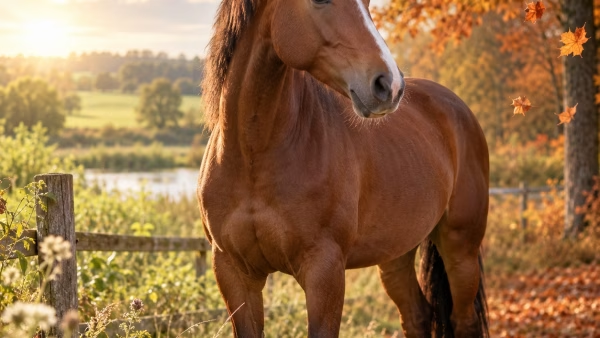
The transition from summer to autumn brings quite a few changes for your horse. The days are getting shorter, temperatures are fluctuating, the winter coat is starting to grow, and rain and mud are becoming more common again.
Particularly in the case of a a horse prone to itching or a horse with sensitive skin It is advisable to keep a close eye on their care during this period.
A horse in autumn may, in fact, need different care to that required in the height of summer.
What changes happen to a horse in autumn?
As the seasons change, you may notice various changes in your horse:
- the summer coat is gradually giving way to the winter coat;
- more loose hairs and, occasionally, flakes of skin are shed;
- warm days are interspersed with cold or damp nights;
- rain and mud mean that legs can stay wet for longer;
- Insects may still be active on warmer autumn days;
- the skin is increasingly hidden beneath a thicker coat;
- Some horses start to rub or scratch themselves more.
Not every horse reacts in the same way to the change of season as autumn approaches. So be sure to keep a close eye on any changes in your horse.
A horse’s winter coat: check the skin as well
When the your horse’s winter coat is starting to come through, and the coat is becoming increasingly full.
As a result, dirt, sweat, loose hairs and dandruff can get trapped between the hairs more easily. Regular brushing not only helps to keep the coat clean, but is also a good opportunity to check the skin.
Take, for example:
- flakes;
- crusts;
- bald or patchy areas;
- minor cuts;
- redness;
- areas where your horse rubs a lot.
In horses with a long or thick winter coat, changes to the skin are sometimes less immediately apparent.
Does your horse still suffer from itchy skin in the autumn?
Yes, that’s certainly possible.
Just because the first cooler days arrive doesn’t automatically mean that all the summer bugs are gone. On mild and warm autumn days, insects may still be around.
Has your horse suffered a lot from itching or rubbing over the summer? If so, don’t automatically stop grooming them just because September has begun.
Keep an eye on the weather and on your horse.
Gradually phase out the care when you notice that the need for it is genuinely decreasing.
More rain and mud: pay extra attention to the horses’ legs
Autumn often brings more rain, damp and mud.
This requires extra attention to be paid to the lower legs and pasterns. Horses with a lot of feathering, or those prone to mud fever, thrush or sensitive skin, in particular, can benefit from regular checks.
Check the legs for:
- crusts
- flakes
- small cracks or cuts
- damp skin
- heat
- swelling
Also, try not to get your legs wet more often than necessary. Skin that gets wet time and time again and finds it difficult to dry out deserves extra care.
Does your horse suffer from itchy skin? Treat it externally and support it from within
At Paardenkriebels, we don’t just look at what you can see on the outside of the horse.
A good skincare routine can consist of external skincare as well as appropriate support from within.
External care is important for keeping the skin clean, supple and well-cared-for. From the inside, you can look at factors such as diet and herbs that are suitable for the individual horse.
It is precisely with a horse prone to itching that we like to look at the full picture.
Because every horse is different.
What can you do as the seasons change?
A few simple things can help you spot changes quickly:
- Groom your horse regularly;
- whilst brushing, run your hands through the coat as well;
- check the mane and tail;
- Have a good look under long hair and wallpaper;
- check the wheel wells;
- keep an eye out for any changes in itching or a prickling sensation;
- adapt your grooming routine to suit the weather and your horse;
- Ensure they receive a suitable diet and daily care.
Don’t wait until small changes turn into large patches before taking a close look at your skin.
When should you be particularly vigilant?
A slight change in the coat during autumn is normal. However, be particularly vigilant if your horse suddenly starts rubbing itself a lot more, if sores appear, or if there are noticeable changes to the skin.
Heat, swelling, pain, weeping sores or recurring skin problems are also reasons to investigate further.
If your pet has severe, sudden or persistent symptoms, it is advisable to consult a vet.
Every horse needs different care in autumn
There is no standard autumn care regime that is the same for every horse.
One horse transitions smoothly from its summer to its winter coat, whilst another horse, on the other hand, during the change of season is more prone to itching, flaking, sensitive skin or damp conditions.
You should therefore look at the horse as a whole and tailor its care accordingly.
Personalised advice for your horse
Does your horse have a skin prone to itching, does your horse suffer from chafing, flaking or legs prone to mud fever, or are you unsure which care routine is right for your horse?
At Paardenkriebels, we’re happy to help you explore your options.
Our vision is clear: care from the outside and support from the inside, tailored to the individual horse.
Please feel free to get in touch for personalised advice.