



Swollen legs in horses – providing support from the inside and out
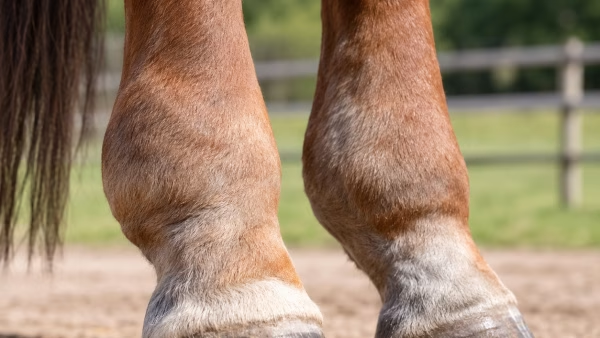
What are thick legs?
- Swollen legs are a common occurrence in horses.
- The lower legs may feel a little swollen, heavier or less supple as a result.
- This can affect one leg or several legs, and sometimes varies throughout the day.
- For some horses, it is simply a reaction to a lack of exercise or fluid,
whilst other horses are more sensitive to it.
Where is it most commonly found?
- Lower legs
- Kootholte
- Often hind legs
Sometimes it’s temporary, sometimes it’s recurrent.
What can cause legs to become thicker?
There are several factors that may play a role here:
- Little movement / a lot of standing still
- Moisture / mud
- Heat
- Thick socks → less ventilation
- Lymphatic stasis
- General skin sensitivity
- Low resistance
There can therefore be several causes of swollen legs.
That is why many horse owners opt for a combination of indoor and outdoor support.
How can you tell if your legs are thick?
Many horse owners notice:
- Thicker lower legs
- “Cushions” in the knee joint cavity
- Skin that feels firmer
- Less fluid movement
- In some cases, a few scabs or flakes
Sometimes the legs are swollen in the morning, but this improves with movement.
What can you do yourself in the meantime?
🟢 1) Encouraging physical activity
Going for a walk regularly often helps to keep your legs supple.
🟢 2) Keep it clean and dry
Moisture and dirt can make the skin more sensitive.
🟢 3) Give the socks / wallpaper a good brush
Provides more air and less heat.
🟢 4) Combining indoor and outdoor elements
Many owners find this a pleasant experience.
External support
Regular care helps to keep your legs clean and supple.
Recommended products
👉 Green-XL Leg Cleaner / Shampoo
For gentle cleansing of socks and lower legs.
👉 Laveos Mud Guard Oil
Provides gentle care and keeps the skin feeling comfortable.
👉 Laveos Honey Salve
Great for dry patches or rough skin.
➡️ Choose what suits your horse and the situation.
Support from within
Because swollen legs are often linked to lymphatic function and overall balance,
Many horse owners opt for herbal supplements.
Commonly used herbs include:
- Nettle
- Cleavers
- Dandelion leaf
These herbs are often chosen for horses that could do with a little extra support with elimination and overall balance.
👉 Take a look at the Total Care Package – care from the outside and support from the inside.
Frequently Asked Questions
➤ Do swollen legs go away on their own?
Sometimes they improve simply when the horse moves about more.
Supportive care can be pleasant.
Do I need to cut my socks?
Not necessarily.
Brushing thoroughly and keeping it dry often helps as well.
Does it help to combine indoor and outdoor spaces?
Many horse owners find that a comprehensive approach works better.
When should I ring the vet?
If a leg suddenly becomes swollen, warm or painful, or if your horse is limping or has a fever, please contact your vet.
Summary
- Swollen legs are a common occurrence
- Common in horses with sock-like hooves & little exercise
- Keeping it clean, dry and moving is important
- Combining indoor and outdoor spaces can be enjoyable
- This is how you can support your horse, step by step.