



Caring for your horse in winter: 7 important tips for skin, coat and nutrition
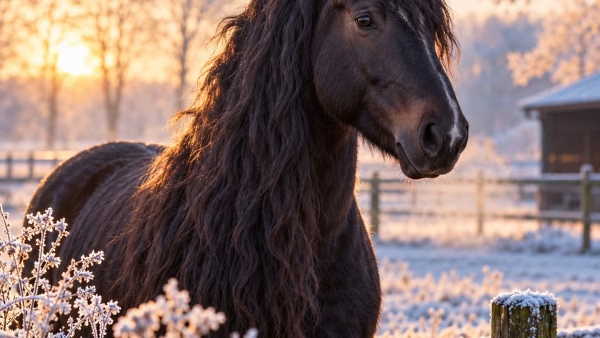
Winter brings more changes for horses than you might think. Cold temperatures, rain, mud, a thick winter coat and changes to their diet all require extra attention. Horses with sensitive skin or a lot of hair on their legs, in particular, deserve a good grooming routine during this time of year.
But what exactly should you look out for? And did you know that a thick winter coat doesn’t automatically mean your horse needs extra warmth?
In this blog, you’ll discover seven practical tips for looking after your horse during the cold and wet months.
1. Your horse’s winter coat is smarter than you think
As soon as the days start to get shorter, your horse’s body begins to prepare for winter.
The winter coat consists of longer hairs and an insulating undercoat. Air remains trapped between these hairs, which helps to retain body heat.
Did you know that the amount of daylight, in particular, affects the development of the winter coat?
A horse with a good winter coat can often cope very well with low temperatures. However, age, health, shelter and weather conditions do play an important role.
You should therefore check your horse’s condition regularly, especially if it spends a lot of time outdoors.
2. Mud and wet horse legs: extra care in winter
Sound familiar? You take your horse out of the paddock and its legs are covered in mud.
In autumn and winter, horses’ legs are often exposed to prolonged damp, mud and fluctuating temperatures.
It is particularly advisable to check under the coat regularly in horses with a thick coat, such as Friesians and Tinkers.
Please note the following:
- Flakes amongst the hairs
- Scabs or changes to the skin
- Damp patches under the wallpaper
- Sensitive skin around the ankle joints
- Changes in the skin folds
An important tip: don’t automatically wash muddy legs every day. Washing them frequently without drying them properly can cause the skin to remain damp for a long time.
Allow mud to dry where possible and remove it carefully. Check the skin and ensure that the legs are allowed to dry thoroughly after washing.
Mug and grater for horses in winter
‘Mok’ and ‘rasp’ are common search terms amongst horse owners, particularly during wet spells.
However, not every flake or scab necessarily indicates that the condition is mange or scabies. Various skin conditions can look similar.
A good daily grooming routine therefore starts with assessing your horse’s skin, the conditions and what your horse needs.
3. Don’t forget the skin underneath the thick winter coat
A thick winter coat can hide a lot.
Flaking, sore patches and changes to the skin are sometimes only noticed whilst grooming.
So make sure you take the time to run your hands through their coat regularly.
Pay particular attention to the mane, the base of the tail, the belly, the legs and any areas where blankets or tack might chafe.
For horses with sensitive skin, it is advisable to choose grooming products carefully and not to use an unnecessarily large number of different products at the same time.
My tip: don’t just look at the coat, but also at the skin underneath.
4. Horse nutrition in winter: what changes?
During the winter months, many horses’ daily feed rations change.
Whilst fresh grass is still available during the warmer months, the winter ration often consists largely of hay or pre-dried grass.
Good-quality roughage remains the basis of the diet.
Furthermore, the digestion of fibre generates heat. This is one of the reasons why it is so important to provide sufficient roughage during cold spells.
You should also ensure there is a supply of clean drinking water and an appropriate intake of vitamins and minerals.
Not every horse automatically needs more concentrated feed in winter. This depends, amongst other things, on the horse’s condition, exercise, housing and individual energy requirements.
Herbs as a supplement to the winter diet
As well as a well-balanced diet, some horse owners opt for a natural herbal mix.
At Paardenkriebels, you’ll find the Winter Mix – Skin & Immunity, a blend of four botanical herbs designed to complement your daily diet.
The blend is intended for use during the colder months and forms part of a balanced diet.
View the Paardenkriebels Winter Mix – from €29.95.
5. Does your horse need a rug in winter?
Not every horse needs a winter rug.
A healthy, unshorn pony with a thick winter coat can often cope well with cold temperatures, provided it has sufficient feed, water and shelter.
The situation may be different for clipped horses, older horses or horses that are not in peak condition.
Check regularly under the blanket to ensure the skin remains dry and that no chafing occurs.
A blanket must fit properly and must not exert any unnecessary pressure on the shoulders, chest or withers.
6. Exercise remains important, even in cold weather
Shorter days and wet riding arenas can mean that horses get less exercise in winter.
Nevertheless, freedom of movement in everyday life remains important.
Walking outdoors, social interaction and plenty of space all contribute to your horse’s wellbeing.
Also check the ground conditions. A slippery paddock, frozen tracks or deep mud can present additional challenges.
A dry place to stand and eat is therefore no luxury.
7. Natural horse care: care from the inside and the outside
At Paardenkriebels, I like to look at the bigger picture.
Caring for a horse is not just about what you can see on the outside. Nutrition, accommodation, weather conditions and the daily care routine also deserve attention.
‘From the inside out and from the outside in’ is therefore a key principle underpinning my range.
For external care, there are various natural products and carefully formulated care kits. You’ll also find herbal blends that can be used to supplement the daily diet.
Which products are suitable depends on your horse’s individual circumstances.
Frequently asked questions about horses in winter
Can a horse feel the cold even with a winter coat?
Yes. Although a horse’s winter coat provides good insulation, prolonged rain, strong winds, inadequate nutrition and poor physical condition can all affect how a horse copes with the cold.
Do you need to wash muddy horse legs every day?
No, that isn’t always necessary. It’s often better to let the mud dry out and then remove it carefully. If the skin remains abnormal, painful or swollen, have it examined by a vet.
Why does my horse have dandruff in winter?
Flaking can have various causes. These include skin conditions, damp conditions, parasites or other skin problems. You cannot determine the cause based on flaking alone.
Does a horse need extra feed in winter?
That varies from horse to horse. It is important to provide sufficient good-quality roughage. The horse’s other nutritional requirements depend on factors such as age, condition, exercise and housing.
What natural care products are suitable for a horse with sensitive skin?
That depends on the area, the condition of your skin and the circumstances. Choose products that are suitable for your specific skincare needs and use them as directed.
Make sure your horse gets the attention it deserves, even in winter
Winter doesn’t always call for more products, but rather for conscious choices.
By paying attention to your horse’s diet, skin, coat, exercise and stabling, you’ll lay a solid foundation for its day-to-day care.
At Paardenkriebels.nl, you’ll find natural care products, herbal blends and curated care sets.
Discover natural horse care at Paardenkriebels
Would you like to know which care options are best suited to your horse? Feel free to send me a WhatsApp message for some no-obligation, personalised advice.
Kind regards,
Monique – Paardenkriebels.nl