



From itching to bald patches: when should you take action if your horse is itchy?
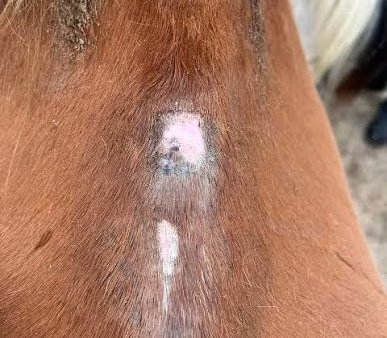
I’m sure you’ve been there: you’re happily grooming your horse when suddenly you spot something you hadn’t noticed before. A small bald patch in the coat. Or perhaps there’s clearly less hair in a particular spot.
Your first thought is probably: How did my horse get this?
A bald patch on your horse can be quite a shock at first. However, hair loss does not necessarily mean that there is anything serious wrong. There are various possible causes, and sometimes it is enough simply to take a close look at the patch and keep an eye on any changes.
In other cases, a patch may keep reappearing, become larger, or your horse may clearly seem to be suffering from itching or discomfort. In such cases, it is advisable to have the patch examined by a vet.
In this article, we set out a number of possible causes of bald patches and hair loss in horses listed out for you.
Important: This blog provides general information and is not a substitute for advice, examination or a diagnosis from a vet. If you are in any doubt, or if your pet has persistent or serious symptoms, or if a lesion changes rapidly or spreads, it is advisable to contact your vet.
A bald patch: take a good look first
When you spot a bald patch, it’s tempting to immediately start trying all sorts of remedies. However, it’s often better to take a close look first at exactly what you’re seeing.
What does the patch look like? Is the skin clear, or can you see, for example, flaky patches or scabs? Is it a neat, round patch, or is it irregular in shape? And perhaps most importantly: How does your horse behave?
Does he rub himself a lot? Does he scratch certain areas? Or does he seem to be completely fine?
The location of the bald patch can also provide relevant information. For example, is it situated exactly where a blanket, halter or other piece of equipment comes into contact with the coat?
If necessary, take a photo of the area. If you take another photo later, it will be easier to see whether the area or the surrounding skin and coat have changed.
Is the spot still there, has it changed, or are you concerned about it? If so, ask your vet for advice.
1. Friction caused by a blanket, halter or harness
In some cases, friction may play a role in localised hair loss.
A blanket, halter or harness comes into contact with the coat and skin in various places. If you notice hair loss in an area where the equipment regularly comes into contact with the horse, it is therefore a good idea to check the fit as well.
Check regularly to ensure that the equipment still fits properly. Horses’ condition and coat can change over the course of the year, meaning that something which fitted well previously may not fit as well later on.
Do you keep noticing hair loss in the same spot? If so, check whether there might be any friction. If the hair loss persists or if you also notice any changes to the skin, ask your vet for advice.
2. Your horse rubs or scratches a lot
If a horse rubs or scratches itself regularly, this may be accompanied by damage to the coat and localised hair loss.
You might see him running along a fence with his neck, rubbing his tail against a tree, or trying in some other way to reach a particular spot.
So do pay close attention to your horse’s behaviour. Where does he scratch? When does he do it? And how often?
It is important to bear in mind that the bald patch you see may be the result of the rubbing, whilst the cause of the rubbing may lie elsewhere.
If your horse is rubbing itself a lot or more frequently than usual, or if you notice any other changes to its skin or behaviour, it is advisable to seek advice from your vet.
3. Insects may play a role
There are often lots of insects around horses, particularly during the warmer months. Some horses seem to react very little to this, whilst others tend to rub, scratch or bite more frequently during this period.
If a horse rubs or scratches itself frequently, this can lead to damage to the coat and the development of bald patches.
Have you noticed that your horse rubs or scratches more at certain times of the year? If so, it may be useful to keep a record of when this behaviour occurs and any changes you notice in the skin and coat.
If your horse continues to experience severe itching or discomfort, if skin changes develop, or if the symptoms get worse, please contact your vet.
4. Parasites as a possible factor
Parasites are also among the possible factors that may be investigated in connection with changes to the skin and coat. Skin and coat problems may, for example, include itching, flaking, changes to the skin or hair loss.
However, the same applies here as with many other possible causes: A bald patch doesn’t automatically tell you exactly what’s going on.
Various problems may look similar on the surface. It is therefore unwise to make a diagnosis yourself based solely on the appearance of a spot.
If you’re unsure about what you’re seeing, or if the symptoms persist or get worse, it’s a good idea to consult your vet.
5. A fungal infection can also be investigated
A fungal infection is also one of the possible causes that should be investigated in the event of changes to the skin and coat.
With certain skin conditions, for example, round or irregular patches of hair loss, flaking or scabs may appear. However, it is not possible to determine the cause based on appearance alone.
It is therefore wise not to jump to the conclusion that a bald patch is caused by a fungus.
Do you notice that the patches are spreading, that more patches are appearing, or that the skin changes are persisting? If so, please contact your vet for an assessment.
6. Is it just moulting?
And then, of course, there’s the annual shedding.
During the moulting season, a horse can sometimes look a bit patchy. For example, one area may be further along in shedding the old coat than another.
As a result, the coat may look a little patchy for a while.
However, it is not always easy for an owner to tell the difference between normal changes during the moulting season and actual hair loss.
Have you noticed any obvious bald patches, changes to the skin or an unusually high level of itching or discomfort? If so, keep a close eye on how things develop and, if in doubt, contact your vet.
7. Also bear in mind personal care products
We use all sorts of products to look after our horses, such as shampoo, sprays, insect repellents and other grooming products.
Sometimes, changes to the skin or coat become apparent after using a new grooming product. This does not necessarily mean that the product is the cause, but it can be useful to bear in mind which products you have used recently.
If possible, make a note of which product you used, when you applied it and when you first noticed the change.
If you have a skin problem, it’s best not to just mix and match all sorts of different new products. This can make it harder to keep track of any changes.
If the symptoms persist, get worse or you’re unsure about what you’re seeing, ask your vet for advice.
What can you do yourself if your horse has a bald patch?
Above all, the most important thing is: look, observe and keep track of changes.
For example, you can:
- take a photo of the bald patch;
- keep an eye on the size of the spot;
- check whether any new spots are appearing;
- watch out for rubbing, scratching or other unusual behaviour;
- check whether the area is in a position where friction might occur;
- check the condition of the skin and the surrounding coat.
Don’t rush into trying all sorts of different remedies straight away. A bald patch can have several possible causes, and it isn’t always clear what the problem is based on its appearance alone.
As the owner, you know your horse’s normal behaviour and appearance well. If you notice any changes that concern you – are they persisting or getting worse? – then ask your vet for advice.
When is it advisable to call the vet?
A small bald patch does not necessarily mean that there is anything serious wrong. However, some changes are a good reason to contact your vet.
You might do that, for example, when:
- the bald patch is getting bigger quickly;
- several bald patches appear;
- your horse seems to be very itchy or uncomfortable;
- the skin changes noticeably;
- there are a lot of flakes or scabs visible;
- your horse is behaving differently from usual;
- the hair loss keeps coming back;
- the symptoms persist or get worse;
- You’re unsure or worried.
A vet can examine the skin and coat and determine whether further investigation is required.
A bald patch isn’t always an immediate cause for panic
A a bald patch on your horse This may have various possible causes. Friction, for example, may play a part, and frequent rubbing can also be associated with hair loss. In addition, there are various other factors that may be investigated in connection with changes to the skin and coat, such as insects, parasites or a fungal infection.
The most important thing is not to make a diagnosis yourself based solely on the appearance of the patch. Take a good look at your horse, watch out for any changes and keep an eye on how the patch develops.
As the owner, you are very familiar with your horse’s normal behaviour and appearance, which means you can often spot any changes quickly. If the symptoms persist, get worse, the affected areas spread rapidly, or you are concerned, please contact your vet.
Frequently asked questions about bald patches in horses
Why has my horse suddenly developed a bald patch?
A bald patch can have various possible causes. These include, for example, friction or frequent rubbing. Also insects, parasites, skin problems and changes during the moulting season may be factors. It is not always possible to determine the cause simply by looking at a bald patch. If you are in any doubt or if the symptoms persist, it is advisable to consult your vet.
Can a blanket cause bald patches?
Friction caused by a blanket may play a role in localised hair loss. You should therefore check regularly that the blanket fits properly and see if the affected area corresponds to where the blanket comes into contact with the coat. If the hair loss persists or the skin changes, seek advice from your vet.
My horse rubs itself a lot – what could that mean?
Frequent rubbing can have various possible causes. Pay close attention to where and when your horse is rubbing itself and whether you notice any changes to its skin or coat. It is not possible to determine the cause based on the rubbing behaviour alone. If the rubbing behaviour is persistent or particularly noticeable, it is advisable to seek advice from your vet.
When should I take my pet to the vet if it has a bald patch?
Contact your vet if the affected area gets bigger, if several patches appear, if your horse seems to be very itchy or uncomfortable, if there are obvious changes to the skin, or if the symptoms persist or recur. You can also ask your vet for advice if you are unsure or concerned.