



Recognising rain rot and why it is not a common fungal infection
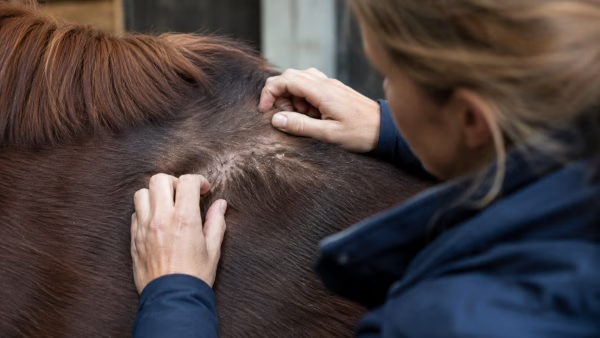
A horse with loose scabs on its back, small bald patches or a rough coat is often suspected of having a fungal infection. However, this is by no means always the correct explanation. Rain rot is usually caused by a bacterial skin infection that takes advantage of a weakened skin barrier. In this article, you’ll learn how to recognise rain rot, why it isn’t a common fungal infection, and how to provide the best possible care for your horse’s skin.
DISCLAIMER: The information in this article is intended as general information on skin care and skin management in horses. Paardenkriebels is not a vet, does not make diagnoses and does not provide veterinary advice. In the event of serious, persistent, recurrent or sudden skin problems, always contact a vet for an examination and appropriate advice.
What is rain scab in horses?
Tinea versicolor is a skin condition that can cause scabs, flaking and hair loss, often in areas that have been damp for a long time or where the skin barrier is compromised.
The name often causes confusion. Many horse owners think that rain scab is a form of fungal infection, as the skin changes can sometimes resemble it. In reality, the problem often arises when moisture, dirt and a damaged skin barrier combine to create a favourable environment for bacteria.
This condition is most commonly seen during the wetter months of the year. Horses that spend long periods outdoors in rainy conditions or under a damp rug are at greater risk of developing skin problems.
How can you recognise the early signs of rain scab?
The first signs often consist of small scabs attached to tufts of hair. When these fall off, they sometimes leave behind a bald or sensitive patch.
At first, the changes seem harmless. The coat looks a little dull, feels coarse to the touch or has small bumps. These patches are particularly noticeable on the back, withers, neck and hindquarters. Some horses may show slight sensitivity when touched or groomed.
As the skin becomes increasingly irritated, the scabs may spread. The skin then takes on a rougher appearance and the coat loses its normal sheen. It is precisely at this stage that rain scab is often mistaken for a fungal infection.
If skin abnormalities continue to increase or if extensive bald patches develop, it is advisable to have a vet examine the skin.
Why isn’t rain mould just an ordinary type of mould?
Tinea versicolor is usually caused by bacteria rather than fungi. Consequently, both the cause and the course of the condition differ.
A fungal infection often causes round, bald patches that gradually spread. Ringworm, on the other hand, is more likely to cause scabbing, with hair falling out in small tufts. The skin often feels bumpy or grainy to the touch.
This distinction is important because different skin conditions can look similar. Without an examination, it is not always possible to determine straight away what is causing the skin changes. That is why a diagnosis by a vet remains the best course of action if symptoms persist.
For horse owners, the greatest benefit often lies in recognising changes in skin condition at an early stage. The sooner you take action to manage the situation, the less likely it is that the skin will become further unbalanced.
What factors increase the risk of rain scab?
Moisture plays a major role in the development of rain scab. Skin that remains wet for a prolonged period loses some of its natural protective function.
You see this, for example, in horses that are regularly out in the rain without their coats having a chance to dry properly in between. Wet rugs, muddy conditions and inadequate ventilation can also contribute to skin problems.
A damaged skin barrier makes problems more likely
The skin normally forms a natural protective barrier. When this barrier is weakened by moisture, chafing or other skin irritations, unwanted micro-organisms are given more opportunity to thrive.
Even minor damage can play a part. A chafed patch caused by a blanket or skin made sensitive by insect bites can make the skin less resilient.
Seasonal changes require extra attention
Skin problems are particularly common in autumn and winter. Rain, fluctuating temperatures and less sunlight mean that the coat stays damp for longer. Checking your pet’s skin regularly helps to spot any changes at an early stage.
Can ringworm be contagious?
Yes, rain scab can, under certain circumstances, be transmitted through direct contact or shared equipment. That does not mean that every horse in the vicinity will automatically develop symptoms.
The condition of the skin plays a major role. A healthy horse with a strong skin barrier will often be less prone to skin problems than a horse whose skin is already compromised.
You should therefore preferably use your own brushes, blankets and grooming equipment when dealing with skin problems. Good hygiene helps to limit the further spread of skin problems within a stable.
As various skin conditions can look similar, it is always advisable to have any cases of doubt assessed by a professional.
How can you support the skin of horses prone to rain rot?
Caring for the skin starts with minimising factors that put it under strain. A dry, clean living environment helps to keep the skin barrier in good condition and reduces additional strain on the skin.
Try not to wash their coat all the time. Excessive washing can disrupt the skin’s natural protective barrier. Instead, opt for a gentle and consistent grooming routine that suits the condition of their skin.
You should also keep an eye on your horse’s general health. Diet, exercise and stress levels all affect the condition of the skin and coat. A horse that is physically well often has a stronger skin barrier.
On the page about rainrot in horses You’ll find more information here about skincare and looking after sensitive skin.
Fewer skin problems by taking care of the skin barrier
Dermatitis often does not develop overnight. It is usually preceded by a period in which moisture, skin stress and reduced skin resistance all come together.
By regularly checking your horse’s skin, minimising exposure to wet conditions as much as possible and paying attention to the condition of its skin and coat, you can spot many problems at an early stage. It is precisely this early intervention that often makes the difference between a minor skin problem and long-term irritation.
Would you like to find out more about skincare and skin management for horses with sensitive skin? Then take a look at the range of Horse jitters or read more about Rain rot in horses and skin care.