



Horses and snow: unlike humans
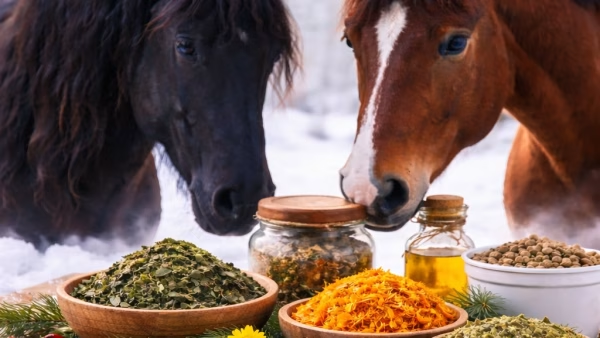
When the first snow falls, we humans immediately put on extra layers. Thick coats, warm socks and gloves are by no means a luxury.
It’s different with horses. What feels cold and uncomfortable to us is often perfectly normal for a horse – and sometimes even pleasant.
Horses are built to withstand the cold
Horses naturally have a good system for keeping themselves warm. In winter, their coat becomes thicker and more airy. This layer traps heat, much like an insulated jacket.
As long as a horse is kept dry, is given sufficient roughage and is sheltered from the wind, the body is perfectly capable of regulating its own temperature – even in the snow.
Snow on a horse’s back or neck does not therefore automatically mean that the horse is cold. In fact, it is often a sign that the horse is retaining its body heat effectively.
No problem with the cold, but it’s wet and windy
What horses are less able to cope with is prolonged dampness combined with wind. Wet hair loses its insulating properties.
That is why it is important to take extra care in winter conditions:
-
shelter from the wind and rain
-
a dry place to sleep
-
legs and leg cavities that remain clean and dry
Not because the cold is bad, but because damp can upset the natural balance.
Energy consumption in winter
During cold spells, a horse uses more energy to keep its body warm. The body does this largely on its own, but sufficient roughage is essential here.
Roughage acts like an internal heater: digesting it helps to maintain body temperature.
Some horses may need a little extra support in winter, tailored to their individual circumstances, age or sensitivities. Not to combat the cold, but to help keep their bodies in balance during this period.
Exercise remains important
Exercise is beneficial even in the snow. Horses that are able to move around gently every day:
-
maintain better blood circulation
-
keep their muscles more supple
-
are less likely to become stiff
Do bear in mind that the hooves may be slippery or have clumps of snow stuck to them. It’s worth checking them after they’ve been outside.
Winter care: focus on the horse, not the weather
What is the main difference between humans and horses in winter?
We feel the cold – horses regulate their own body temperature.
Rather than automatically providing extra blankets or taking further measures, it is wiser to consider:
-
appetite
-
behaviour
-
condition of the skin and legs
-
overall vitality
That’s always where the real answer lies.
💚 In conclusion
Winter and snow are part of a horse’s natural rhythm. With the right basic care, plenty of roughage and attention to keeping the horse dry, a horse can often get through this period just fine.
If you want to look after your horse gently during the winter, it’s a good idea to choose something that’s suitable for the season and for your horse as an individual. The winter mix from Paardenkriebels can be used as additional support from within.