



Lameness and scabbies in horses in autumn: why do their legs remain so sensitive?
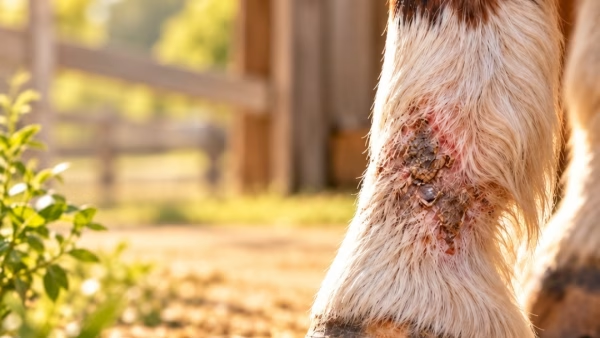
Your horse is standing in the mud, its legs are often wet, and suddenly you notice scabs, flaking or sensitive skin around the pasterns. Sound familiar? Particularly in autumn, many horse owners have to deal with skin problems on their horses’ legs. But did you know that it’s not just mud that plays a part?
It is precisely the combination of moisture, friction, skin sensitivity and daily skincare that can make all the difference.
Why are mumps and chickenpox more common in autumn?
As soon as the days get shorter and the meadows get wetter, there are a lot of changes for the horses’ skin.
The legs are more frequently exposed to mud and moisture. The ankle areas, in particular, can remain wet for long periods. This can make the skin’s natural barrier more vulnerable.
Horses that are prone to mud fever and thrush may show various signs:
- Scabs or flaky patches on the legs
- Dry, rough or sensitive skin
- Redness in the ankle joints
- Thickened or uneven skin
- Discomfort when touching the legs
Eczema is usually seen around the knee pits and lower legs. ‘Rasp’ is a term often used to describe similar skin problems higher up the leg.
However, not every scab is a case of ringworm. Other skin conditions can also cause similar symptoms.
Did you know that washing your hair too often can actually be counterproductive?
Many horse owners believe that muddy legs need to be washed thoroughly every day.
That sounds logical. However, this isn’t always the best choice.
By repeatedly wetting the legs, the skin and the hock cavities can remain moist for a long time. Furthermore, harsh cleaning products can disrupt the skin’s natural barrier.
What could you do better?
- Where possible, allow ordinary mud to dry out first.
- Gently brush away dry mud when the skin is intact.
- Wash only when necessary, using a suitable mild product.
- Dry your legs thoroughly after washing.
- Avoid scrubbing hard and picking at any scabs that have formed.
If your skin is damaged, sore or inflamed, it is important to exercise caution. Have the cause assessed before you start cleansing it intensively yourself.
Why do horses with a lot of hair deserve extra attention?
Friesians, Tinkers and other horse breeds with a thick coat often require extra attention: the skin is less visible beneath the long hair.
Moisture and dirt can remain trapped between the hairs for longer. As a result, flaking, scabs or changes to the skin are sometimes only noticed at a late stage.
Mites can also play a role in skin problems on the legs of horses with a lot of hair.
A horse that stamps, scrapes or regularly nibbles at its legs may be trying to communicate something.
You should therefore check the skin underneath the wallpaper regularly, even if the legs look fine on the outside.
Mite, grater or mite: how can you tell the difference?
These terms are often used interchangeably, even though they do not mean the same thing.
Mug: a collective term for skin problems that mainly occur around the ankles and lower legs.
Grater: is often used for similar skin changes higher up the legs.
Mite: a parasite that can cause skin irritation and itching, particularly in horses with a thick coat.
Rough patches, scuffing, scabs and flaking can occur with a number of skin conditions. You cannot reliably determine the cause based on these signs alone.
If symptoms persist, or if there is swelling, pain, warmth or lameness, it is advisable to consult a vet.
Sensitive horse skin deserves care from both the inside and the outside
At Paardenkriebels, I like to look at the bigger picture.
A good skincare routine starts with a clean, dry living environment, a balanced diet and looking after the skin’s natural barrier.
From the outside It’s all about gentle cleansing and skincare suited to sensitive skin.
From the inside out Where appropriate, you can ensure a balanced diet and provide supplementary herbs. Herbs are not a treatment for mud fever, thrush or mites, and are no substitute for veterinary care.
It is precisely by looking beyond what you can see on the surface that you make more informed choices about your horse’s daily care.
What sort of care is suitable for horses’ legs that are prone to mud fever and scabs?
Not every horse needs the same care.
One horse mainly has dry, flaky skin, whilst another horse regularly suffers from damp pasterns or sensitive skin under the fetlock.
That is why it is important to choose grooming products that are suited to your horse’s skin condition.
At Paardenkriebels you’ll find it Mok/Rasp Care Pack, formulated with a focus on the external care of horses’ legs prone to mud fever and scabs, and providing additional support from within where appropriate.
This pack is intended as part of a care routine, not as a substitute for examination or treatment by a vet.
Prevention starts with looking carefully
A slight change in a horse’s legs isn’t always immediately noticeable.
By regularly checking the nail beds, examining the skin beneath the nail and paying attention to moisture and hygiene, you can spot changes in your skin at an earlier stage.
And remember: Washing more often does not automatically mean better care.
Sometimes, a good skincare routine actually starts with doing less, but making sure you do the right things.
Does your horse have sensitive legs in the autumn?
Would you like to know which natural care products are suitable for your horse?
Then take a look at the Mok/Rasp Care Pack at Paardenkriebels.nl or feel free to send me a WhatsApp message for personalised skincare advice.
Paardenkriebels – natural care that focuses on your horse, both inside and out.